The Studio · Dolby Atmos · Spatial Audio
Why release in Dolby Atmos and Spatial Audio?
Dolby Atmos is a way of mixing music in three dimensions. On Apple Music it is called Spatial Audio, and Apple now pays a bigger share of royalties to songs that are available in it. Here is what it is, why it is worth doing for an independent release, and how we handle it for the artists we work with. We don’t just mix in Atmos at the end: we record with it in mind from the first session, so the Atmos mix is built from recordings made for it, not retrofitted.
In plain words
What Dolby Atmos and Spatial Audio actually are
A stereo mix has two channels: everything lives somewhere between your left ear and your right. A Dolby Atmos mix works with sounds as objects. Each voice or instrument can be placed, and moved, anywhere in a sphere around the listener: in front, behind, to the side and above.
Spatial Audio is the name Apple Music uses for these Dolby Atmos mixes. Apple added it in June 2021 at no extra cost to subscribers. Other services call it Dolby Atmos.
You make one Atmos mix and the listener’s device works out how to play it. On a room full of speakers it plays through the speakers around and above you. On headphones it is turned into a two-ear (binaural) version that keeps the sense of space.
Where people hear it
Most of your listeners already have the kit
You don’t need a cinema in your living room. Spatial Audio plays on things people already own.
AirPods and other headphones
Apple Music plays Dolby Atmos tracks automatically on AirPods and Beats headphones. Amazon Music plays its spatial mixes on any headphones through its iPhone and Android apps.
Phones, tablets and laptops
The built-in speakers on recent iPhone, iPad and Mac models play it, as do Android devices that support Dolby Atmos.
Cars
A growing number of cars have Dolby Atmos sound systems built in.
Smart speakers, soundbars and home cinema
HomePod, Echo Studio, Dolby Atmos soundbars and home-cinema systems all play it, through the streaming apps that support it.
Why do it
Why it matters for an independent artist
Major-label records have been coming out in Atmos for a few years. For independent artists it is still less common, and that is part of the opportunity.
A bigger share of Apple Music royalties
Apple says Spatial Audio content receives a greater share of sound-recording royalties on Apple Music than content not available in it, by up to 10%. Apple told labels this started with the January 2024 payments, and that it counts when a song is available in Spatial Audio, whether or not a particular listener plays the Atmos version.
Dedicated Spatial Audio playlists
Apple Music has editorial playlists made only of Spatial Audio tracks, and albums fully in Dolby Atmos get a badge. A stereo-only song can’t be considered for those playlists at all. Having an Atmos mix makes you eligible; it doesn’t guarantee a place. Editors choose.
Apple is actively pushing it
Apple’s own artist guidance strongly suggests delivering every release in both stereo and Dolby Atmos, and Apple told labels that more than 90% of its subscribers have listened in Spatial Audio. It is not a niche extra on Apple Music any more.
Not just Apple
Amazon Music Unlimited and TIDAL also stream Dolby Atmos music, so the same mix reaches listeners on those services too.
Fewer songs to compete with
Most releases are still stereo-only, so a Spatial Audio playlist or listing draws from a smaller pool of songs than the stereo equivalent. That is our reading of the market rather than a published figure, but it is why we think Atmos helps a new artist stand out.
How we do it
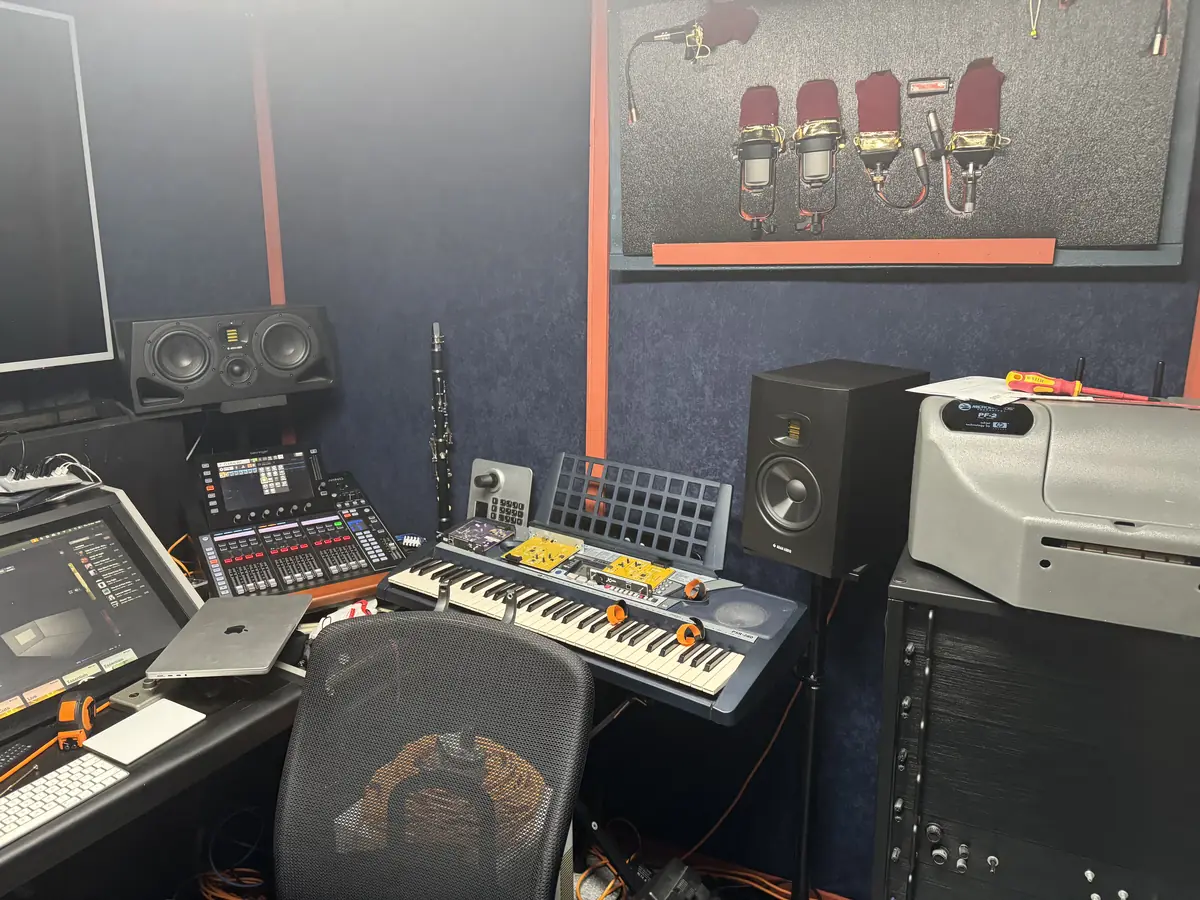
Recorded for Atmos from day one, mixed in our own Atmos room
For the artists we work with, Dolby Atmos is part of the release from the first session, not a bolt-on at the end. Recording for a three-dimensional mix rather than a flat stereo one gives your ideas a bigger canvas, and there is nothing extra for you to organise.
Plan and record with Atmos in mind
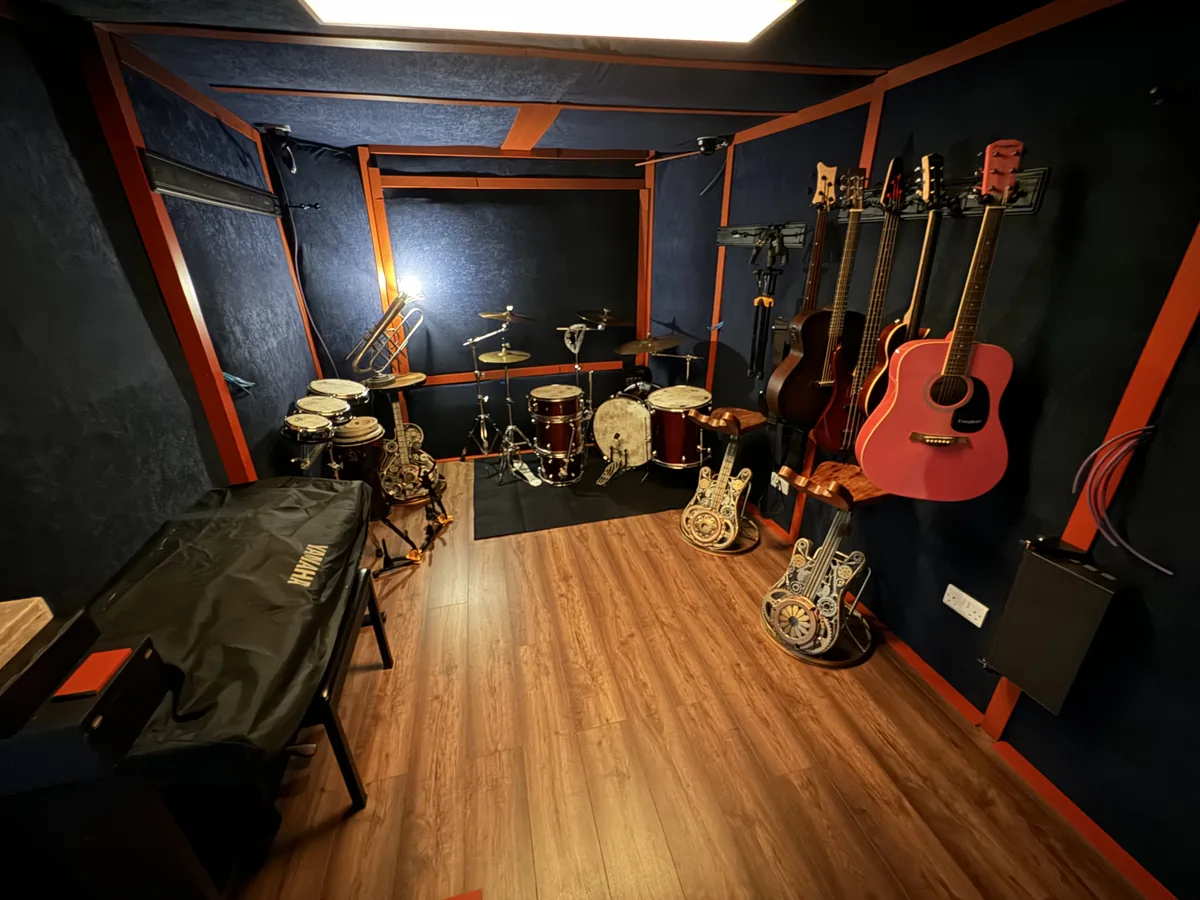
Sessions are planned for a 3D mix from the start. That opens up creative choices: where players and instruments sit in the room, how close or far to mic each source, and capturing the room, its ambience and a sense of height as well as the instruments themselves. Parts can be arranged with space in mind, so there is room for your ideas to move around the listener.
Keep every source separate
We track every part separately in our live room. Apple requires Atmos mixes to be made from the multitracks, not upmixed from a finished stereo file, so the Atmos mix is built from recordings made for it, not retrofitted.
Mix the stereo and the Atmos versions
We mix the stereo master and the Dolby Atmos mix in our own control room, and check the Atmos mix on speakers and on headphones, the way most people will hear it.
Check them against each other
The two versions are lined up and checked against each other so they match in length and timing, as Apple’s specifications require.
Deliver both together
The Atmos master (an ADM file) goes out to the streaming services alongside the stereo master as one release, so it is available in Spatial Audio on Apple Music, and in Dolby Atmos on the other services that support it, from release day.
Common questions
What is the difference between Dolby Atmos and Spatial Audio?
For music, they are the same mix. Dolby Atmos is the format; Spatial Audio is what Apple Music calls Dolby Atmos music. Amazon Music and TIDAL call it Dolby Atmos.
Do my listeners need special speakers to hear it?
No. Apple Music plays Dolby Atmos automatically on AirPods and Beats headphones and on the built-in speakers of recent iPhone, iPad and Mac models, and Amazon Music plays its spatial mixes on any headphones through its phone apps. Soundbars, smart speakers, cars and home-cinema systems that support Dolby Atmos play it too.
How much more does Apple Music pay for Spatial Audio?
Apple says Spatial Audio content receives a greater share of sound-recording royalties than content not available in Spatial Audio, by up to 10%. It is a weighting of your share of Apple Music’s royalty pool, applied when the song is available in Spatial Audio, rather than a fixed extra amount per stream.
Does a listener have to play the Atmos version for the royalty weighting to count?
According to what Apple told labels in 2024, no: the weighting applies to plays of songs that are available in Spatial Audio, whichever version the listener hears.
Will releasing in Atmos get my song onto an Apple Music playlist?
It can’t guarantee it, and nobody honest will promise it. Apple Music’s Spatial Audio playlists only feature songs that have an Atmos mix, so without one you can’t be considered for them. With one, you are eligible; editors decide the rest.
Can you just turn my finished stereo mix into Atmos?
Not for Apple Music. Apple requires Atmos mixes to be made from the original multitracks or stems, and does not allow upmixing or splitting a finished stereo file. That is why we keep every recording as separate tracks from the first session.
Do I still get a normal stereo master?
Yes. The stereo master is still what most people hear on most services. We deliver the Atmos master alongside it, as Apple recommends, so each listener gets the best version their setup can play.
Which services stream Dolby Atmos music?
Apple Music (as Spatial Audio), Amazon Music Unlimited and TIDAL all stream Dolby Atmos music. Not every service does, so the stereo master is always delivered as well.
Do you mix in Dolby Atmos in the UK?
Yes. We record with Atmos in mind from the first session and mix in Dolby Atmos in our own control room at our studio in a quiet UK village, for the artists we record and release. Share one to three tracks with us to start a conversation.
Not sure what any of this means? Talk to us. No jargon, no pressure.
Want your next release in Atmos?
We work with a small number of independent artists at a time, from the first session to release day and beyond. Tell us about your music.
Sources
Checked on 29 September 2026. Platforms change their programmes, so treat anything here as a snapshot and check the source.
- Elevate your sound using Spatial Audio with Dolby Atmos (Apple Music for Artists)
- Apple Music announces Spatial Audio and Lossless Audio (17 May 2021) (Apple Newsroom)
- About Spatial Audio with Dolby Atmos in Apple Music (Apple Support)
- Apple Music to pay artists up to 10% higher royalties for music available in Spatial Audio (Music Business Worldwide, reporting Apple’s letter to labels)
- Amazon Music brings spatial audio to more customers than ever before (19 October 2021) (Amazon)
- Dolby Atmos on TIDAL (Dolby)
- Dolby Atmos Renderer (Dolby Professional)